A handleless kitchen can look calm and uncluttered in a photograph. Before ordering, think about how you will pull out a loaded drawer or open a cupboard with wet hands. Start with the base units around the sink, dishwasher and fridge. Choose an opening method for each position, then check how the choices work across the whole kitchen.
Three different ways to hide the handle
Similar-looking fronts can use different constructions. A front may have a shaped finger grip, a separate recessed rail behind it, or a push-to-open mechanism. Ask to see a section drawing or a sample: where do your fingers go, and which part moves when the cabinet opens?
A grip rail and push-to-open are different actions. With a rail, you pull the front by hand. With push-to-open, you press first, then take hold of the released door or drawer. Identify the actual system in the specification rather than calling both options simply handleless.
External handles: test the grip and adjacent doors
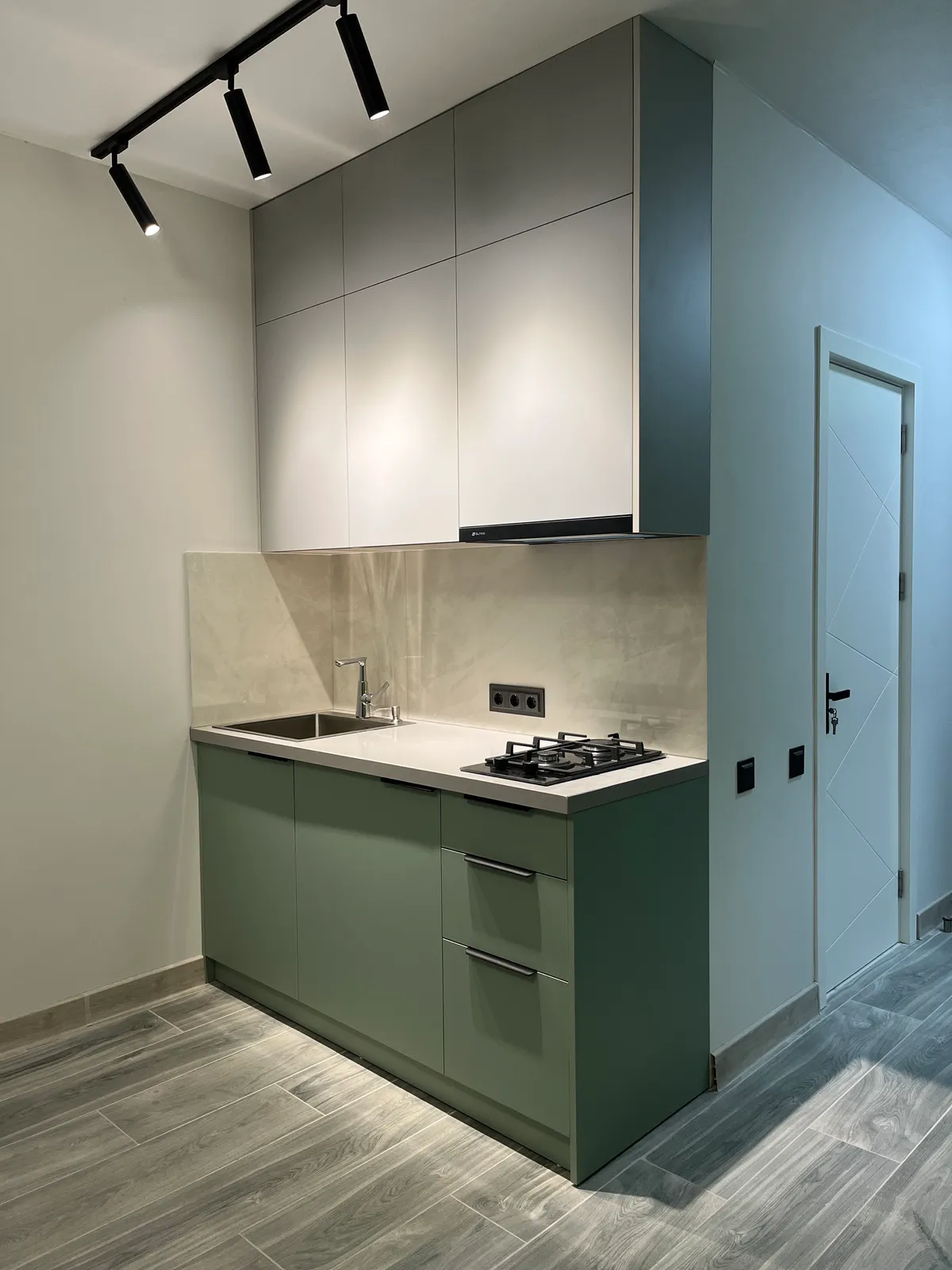
An external handle gives your hand a separate grip. Try a sample as you would use it in the kitchen: with your fingers, with your whole hand and with a towel nearby at the sink. Check whether the ends catch clothing and whether the handle obstructs an adjacent front when a corner cupboard opens.
Grip rails: allow room for your fingers
A continuous rail can form a neat line in a drawing, but it needs to work with the drawers, worktop and adjacent units. Test the grip on a sample, particularly if you have long nails or find bending your fingers difficult. Ask how to clean the recess and how the rail ends beside a wall or tall unit.
Push-to-open does not automatically mean soft-close
Opening assistance and soft closing are separate functions. Some systems combine them, but an ordinary push latch does not necessarily do both. Hinged doors, drawers and lift-up fronts need suitable mechanisms. Ask for the specific system to be listed in the quote and demonstrated opening and closing.
Press the sample front from your normal working position. Close it and repeat the movement. Check where hand marks show on the chosen finish and how easily you can wipe that area. For an integrated fridge or dishwasher, follow the instructions for the actual appliance: a cabinet mechanism cannot automatically be used on an appliance door.
Check each cabinet position
| Position | Check before manufacture |
|---|---|
| Drawers by the preparation area | Grip, opening effort and use with the intended contents. |
| Sink cupboard | Opening and closing with wet hands, and wiping the finish. |
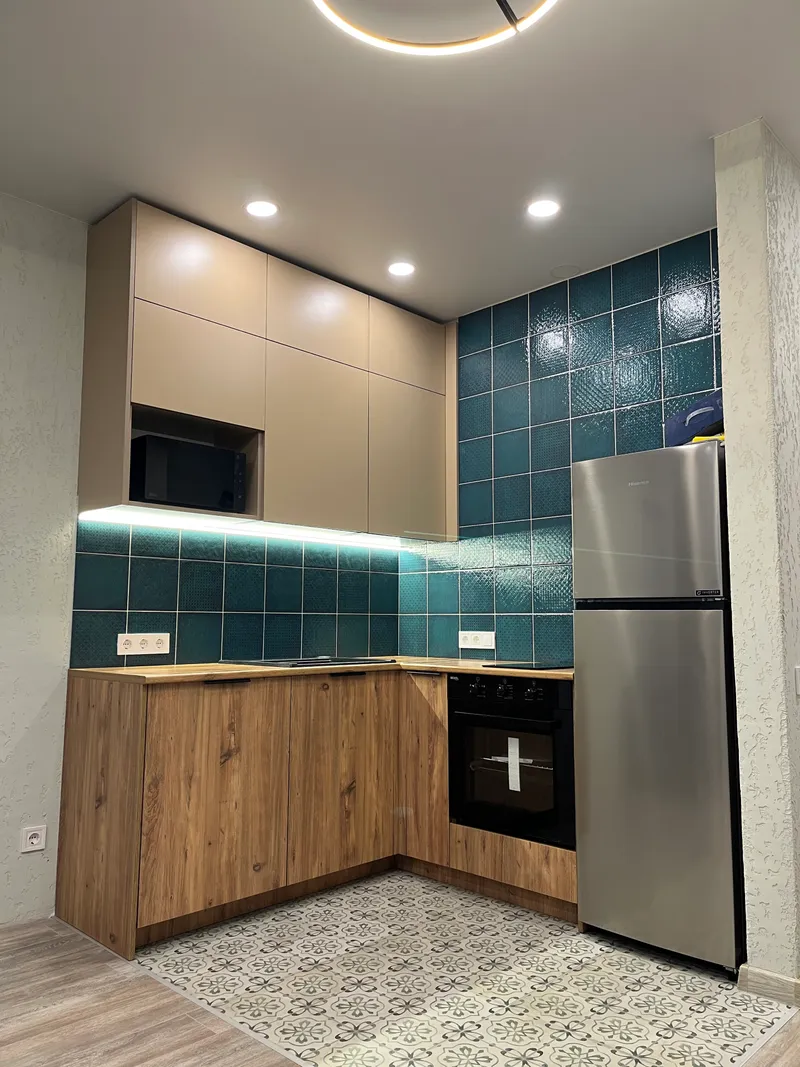
| Corner fronts | Handles, worktop edges and adjacent doors do not obstruct each other. |
| Wall cupboards | You can reach the opening and closing points. |
| Integrated appliances | The opening method suits the chosen appliance model. |
Can you combine different opening methods?
Yes, you can discuss separate choices for wall cupboards, base drawers and tall units. Mark the grip positions and opening directions on the drawing first. Then review the appearance and hardware specification together, so that each choice has a clear purpose and an agreed mechanism.
To discuss a custom kitchen in Batumi, Georgia, send a plan and a photo of the opening style you like. Explain who will use the kitchen and which doors you are unsure about. We agree the construction and available mechanisms for your project before manufacture.